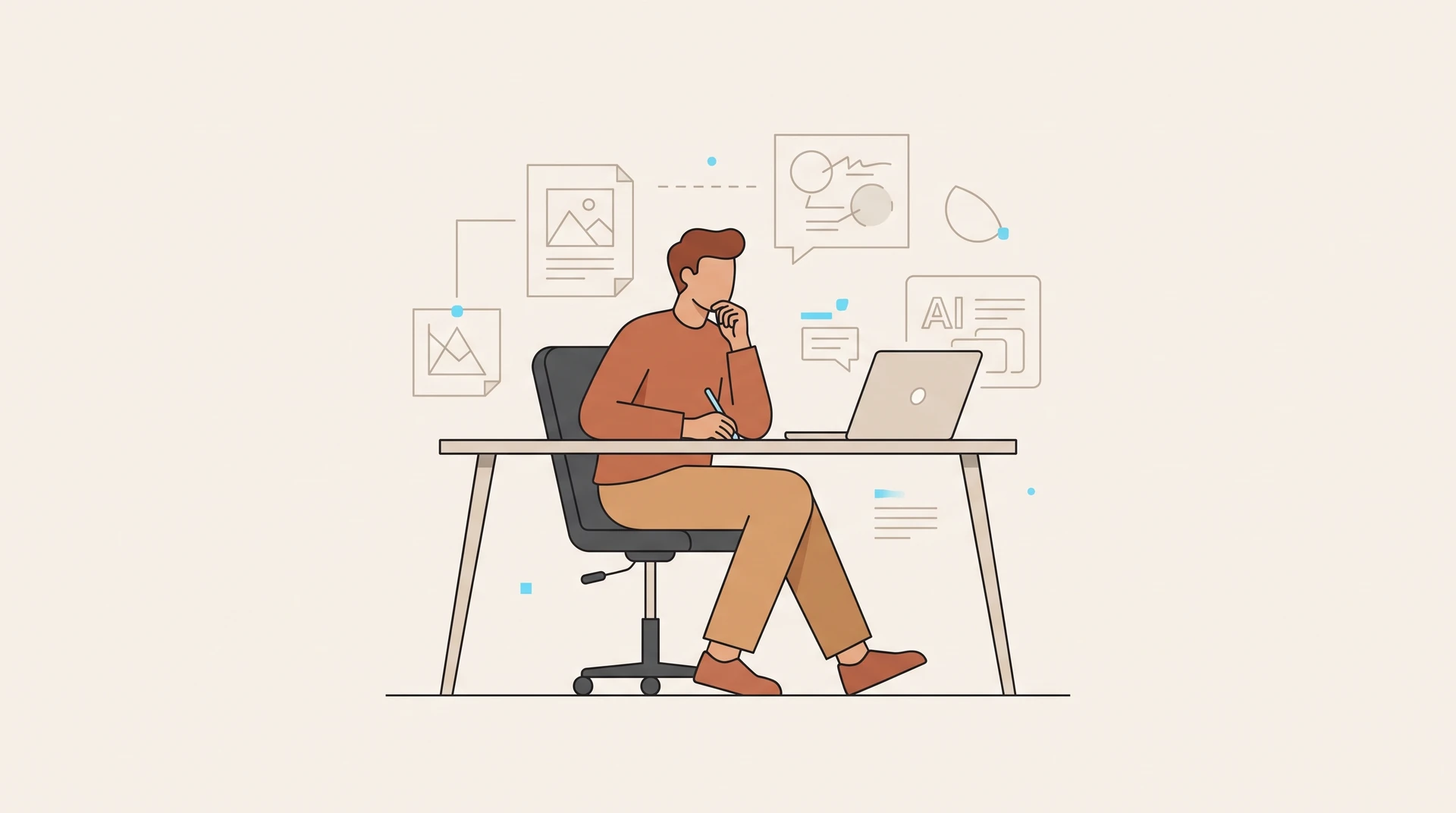
Using AI beyond automation: harnessing creativity as your best resource
Diego Ramirez · 6 July 2026 · 3 min read
Unlimited AI resources - now what?
After implementing countless automations and maximizing AI capabilities, most business founders stumble upon an unexpected dilemma. They've gotten so used to letting artificial intelligence handle routine operations that they find themselves asking, 'What now?' That's not a problem, though—quite the contrary. It signals a transition into a more profound, more strategic phase of using AI. So let's talk about why this is good.
Bringing it back to basics
Imagine, for a moment, that it's the pre-AI era and you're a founder with access to endless business resources. How would you allocate those resources effectively? What challenges would you tackle? Just because technology has evolved doesn't mean these questions are any less relevant. The challenge isn't about having enough resources; it's about deploying them creatively and intelligently.
Before AI, the efficient allocation was about tangible logistics. Now, it’s about leveraging (not the AI buzzword—old-school leveraging) creativity.
The power of creativity in AI resource allocation
Execution has become abundant—or even cheap—thanks to AI. The true scarce skill lies in creativity: the ability to think artistically, solve problems innovatively, and reframe challenges in ways others haven't considered. Visionaries don't just look at a task list and find ways to automate; they ask which new problems are worth solving in the first place.
Think of creativity like an art form. It’s the brush that lets you paint on a new canvas. You may have all the paints, but without a brush, your vision remains unrealized.
So where do you start? By redefining problems and tapping into new opportunity areas where AI can shine. Here’s how:
- Define the impact: Identify where AI implementations can create genuinely transformative outcomes. It’s not just about doing things faster but doing things that matter.
- Explore intersections: Use creativity to merge fields. Where does AI meet customer experience? Where does it enhance storytelling in marketing or revolutionize human resources?
- Challenge norms: Question existing processes and assumptions. Could AI enable a completely different way of handling customer service? What about product development?
The soul of your operations
Tapping into creativity lets you pour your AI resources into the areas that align with your values and goals. It's not about automating for automation's sake; it's about creating a masterpiece that represents your brand's soul.
In the end, the real skill for today's business owners isn't finding more to automate. It's identifying where their AI-driven tools can be most impactful. It's about shifting from being an executor to a creator, from asking 'what can I automate?' to 'what should I build?' And within that shift, you'll find the surprising answer to 'now what?':
Create, define, and disrupt— with purpose.