Why we built real-time streaming into our AI workflow builder
Diego Ramirez · 10 March 2026 · 3 min read
Reimagining AI workflow generation
Most AI solutions present a deceptively simple promise: let us do the work, and you'll reap the benefits. But there's a catch—a frustrating gap between promise and reality when your role is reduced to that of a reviewer. With our AI system, Agentic OS, we initially faced this very issue. Our agents generated entire workflows behind the scenes, and only when they were done did we reveal the outcome to users. The result was often a cycle of waiting, reviewing, and reworking—a process far from efficient.
The pitfalls of the old way
Consider the traditional approach. You initiate a task, step back, and wait for the AI's final output. Then you find a hiccup—a misunderstood direction or a flawed approach. What then? You end up reworking it all, spending precious tokens and time on outputs that might not even stay. This isn't collaboration; this is reviewing your AI's homework.
Most AI tools operate this way. Get a result, refine it, and maybe—just maybe—it's usable. But the process burns resources and leaves the human partner in the dark for too long.
Real-time streaming: a collaborative breakthrough
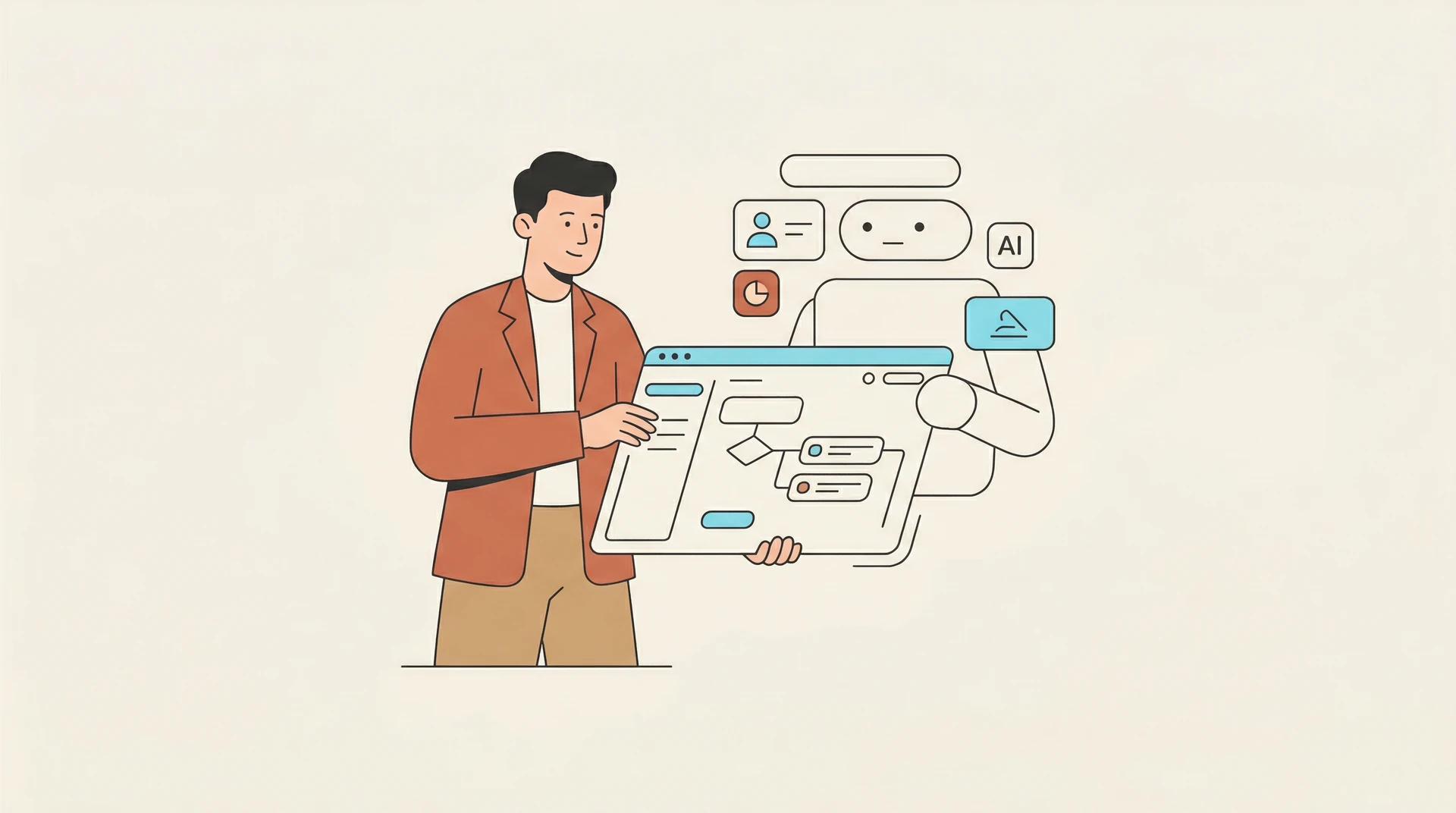
We built real-time streaming into our workflow builder because we saw a better way forward. Streaming turns users into guides rather than critics. Imagine guiding the AI during the process, not after the fact. Real-time updates transform your relationship with AI from passive to actively collaborative—pair programming, not ordering a report.
By seeing workflow formation live, users can spot incorrect paths early on and navigate the direction themselves. You save time, save tokens, and avoid investing computational resources on undesired outcomes. More human per hour, indeed.
Human-computer interaction redefined
There's a distinct shift in how you interact with AI when its processes are visible and malleable in real-time. This isn't just technological evolution—it's a change in the human-computer dynamic. Real-time streaming engages users continuously, fostering a deeper bond between user and machine.
Think of it as pair programming with AI. You're not waiting for the output; you're part of its creation. Dynamic editing and immediate feedback enhance the workflow's precision, making every step count.
Balancing multi-agent environments
What if you're managing multiple agents on separate workflows? Is real-time streaming still beneficial? We believe it is. Streaming compels focus. It lets you co-create a primary workflow while others run in the backdrop, giving you the choice to shift context if needed. It requires concentration—an increasingly vital skill. It aligns your focus with your ultimate goals.
Flexibility for the future
The world of AI is evolving, and so is our need for adaptable solutions. Our streaming approach offers flexibility. You can choose to engage live, or let the process unfold in the background. It supports both strategies—allowing humans to lead or observe per their need.
In integrating real-time streaming into Agentic OS, we've built not just a tool but birthed a new mode of human-AI collaboration. This transformation from interaction to cooperation is what marks this innovation as truly valuable—an AI solution that partners with its human counterpart. The future of workflow automation isn't in fixing outputs but in building them together.